
Replacing a system with no spec, without stopping it
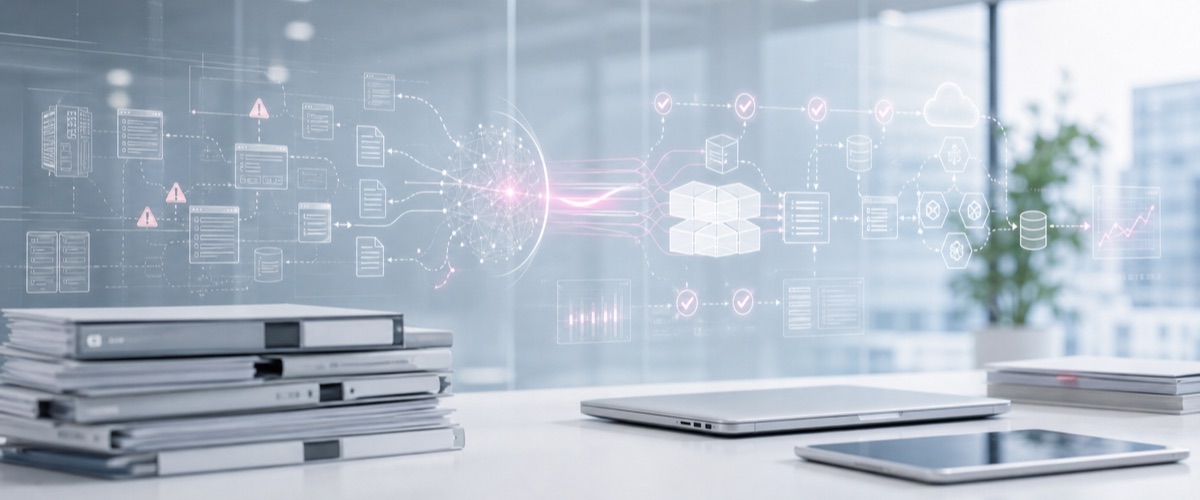
In its 2018 "DX Report", the Ministry of Economy, Trade and Industry (METI) called this problem the "2025 digital cliff", and it has not gone away now that 2025 has passed. The systems are written in old languages and frameworks, the specifications are lost, and the people who built them have moved on or left. Daily operations still run on them.
Rebuilding everything is the last resort
The first proposal in a modernization discussion is usually "rebuild it from scratch with newer technology." The impulse is understandable, and it is also the riskiest option. An old system holds exception handling that no document mentions, and business rules added over many years. If you rebuild, you step on them one by one and find out in production.
We do not assume a full rebuild. We first understand what the system does now, fix that behavior in tests, and then replace it part by part.
An LLM can help with the reading
Writing a specification from code used to take months. Now we can have an LLM read the code and list the processing flow, the data dependencies and candidate business rules.
We do not take the LLM's explanation at face value. We check what it writes against actual inputs and outputs, production logs and what the screens do. Where the explanation and reality disagree is where a migration is most likely to go wrong.
Fix the behavior in tests
Once the behavior is understood, we write tests whose expected values are simply what the current system returns. Whether that behavior is "correct" does not matter. The point is to record that it works this way today. With these tests, we can check mechanically that a replaced part returns the same results. A coding agent also helps with drafting the tests.
Switch over part by part
We place the new system next to the old one and move processing across a little at a time, by function or screen. If something goes wrong, only that part is switched back. It takes longer than switching everything at once, but there is no day when the business has to stop.
We set up monitoring first, so that response times and error rates can be compared before and after each move.
Related services
- Legacy system modernization and migration: code analysis, migration planning, staged replacement
- Cloud migration and operations platform: designing the target platform and monitoring
- Technical advisory and development partner: getting a system that is not working well back on track
Replace it gradually, without stopping.
Talk to us about reading a system with no spec and planning a migration that keeps the business running.